

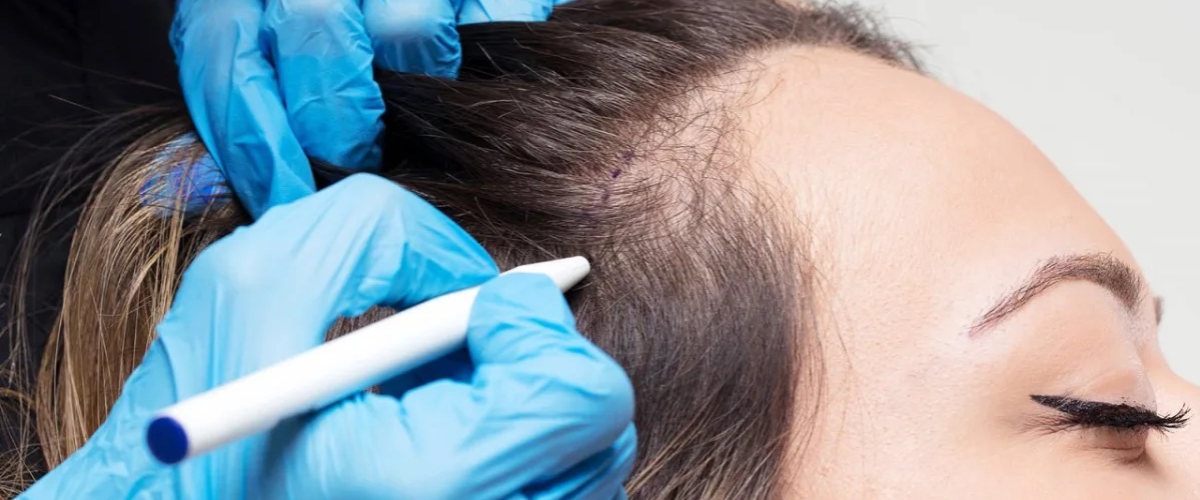
Female Hair Transplant: Natural, and Personalized Hair Restoration for Women at Medana
Hair loss in women often goes far beyond the physical. It can deeply affect self-esteem, emotional well-being, and the way a woman sees herself in daily life. At Medana, we recognize that restoring hair for women is a highly personal journey. Our approach is designed specifically around the female experience, focusing on care, discretion, and achieving results that look and feel completely natural.
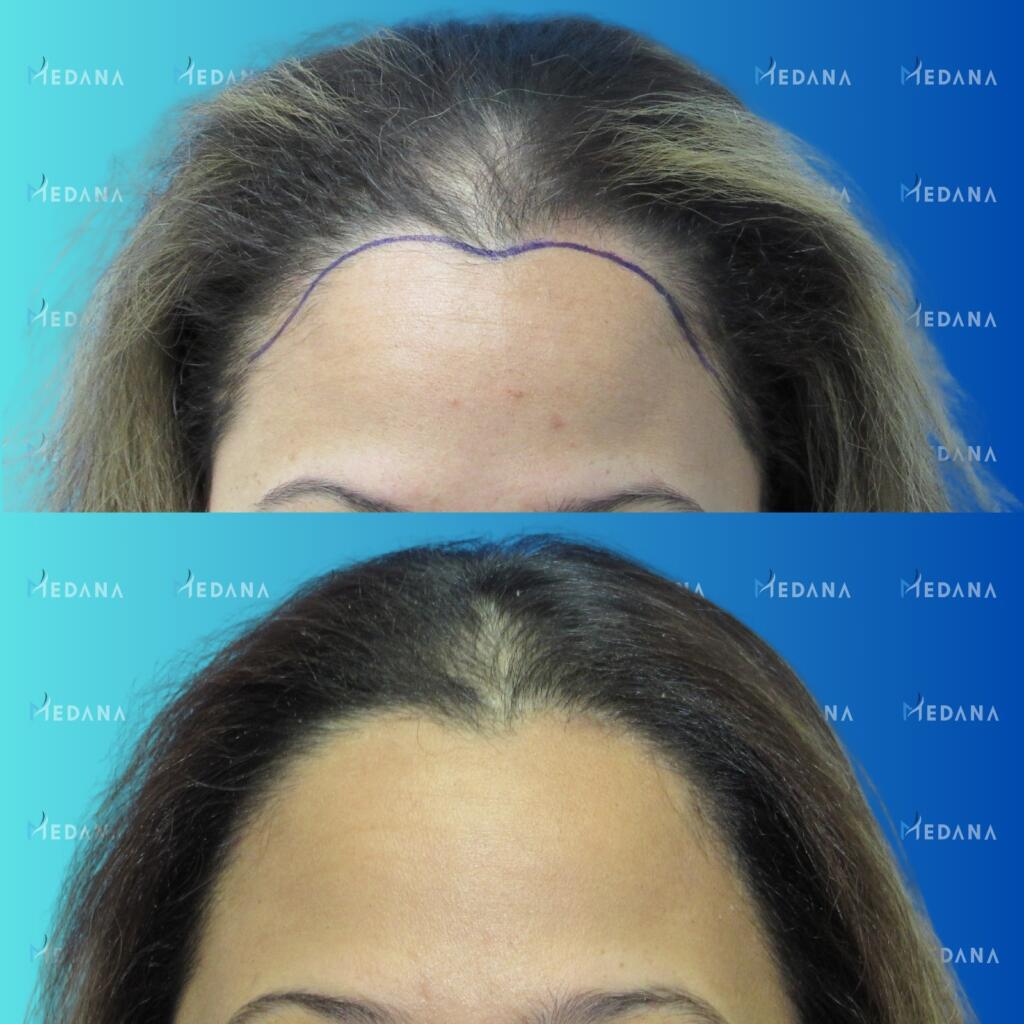
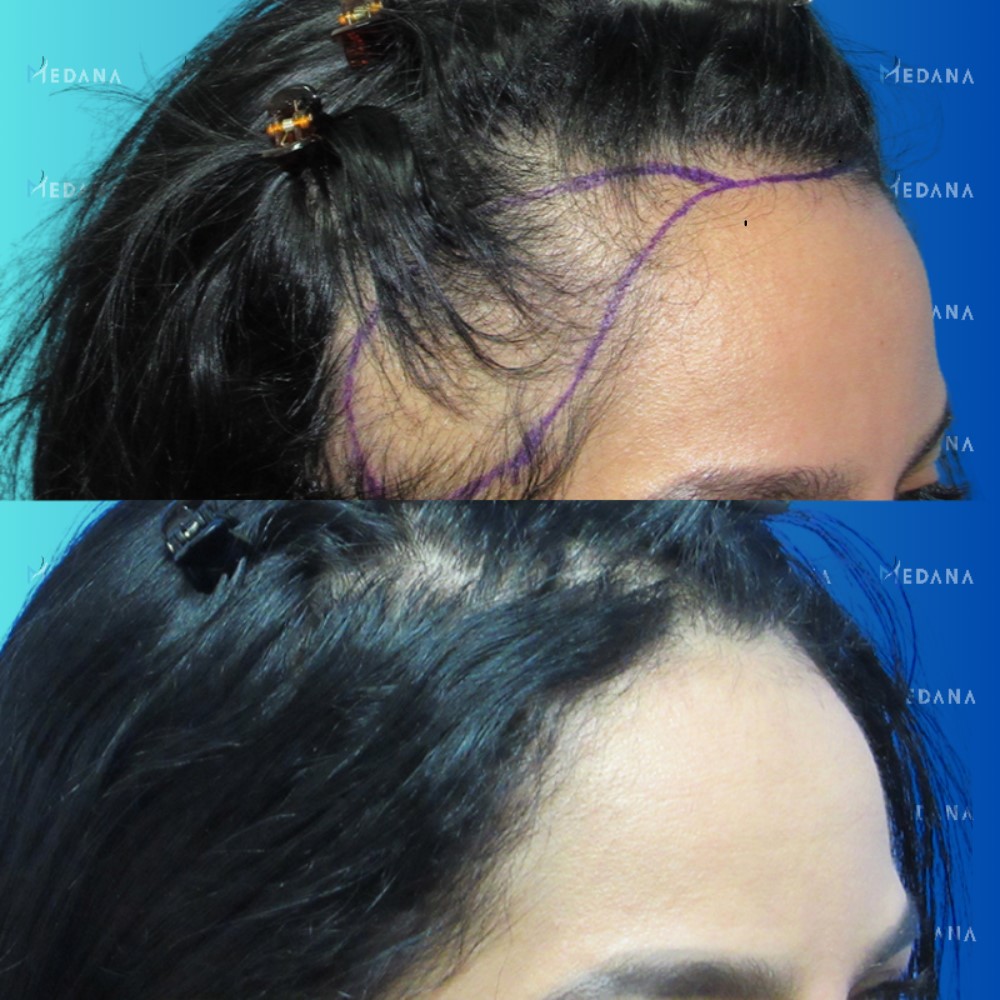
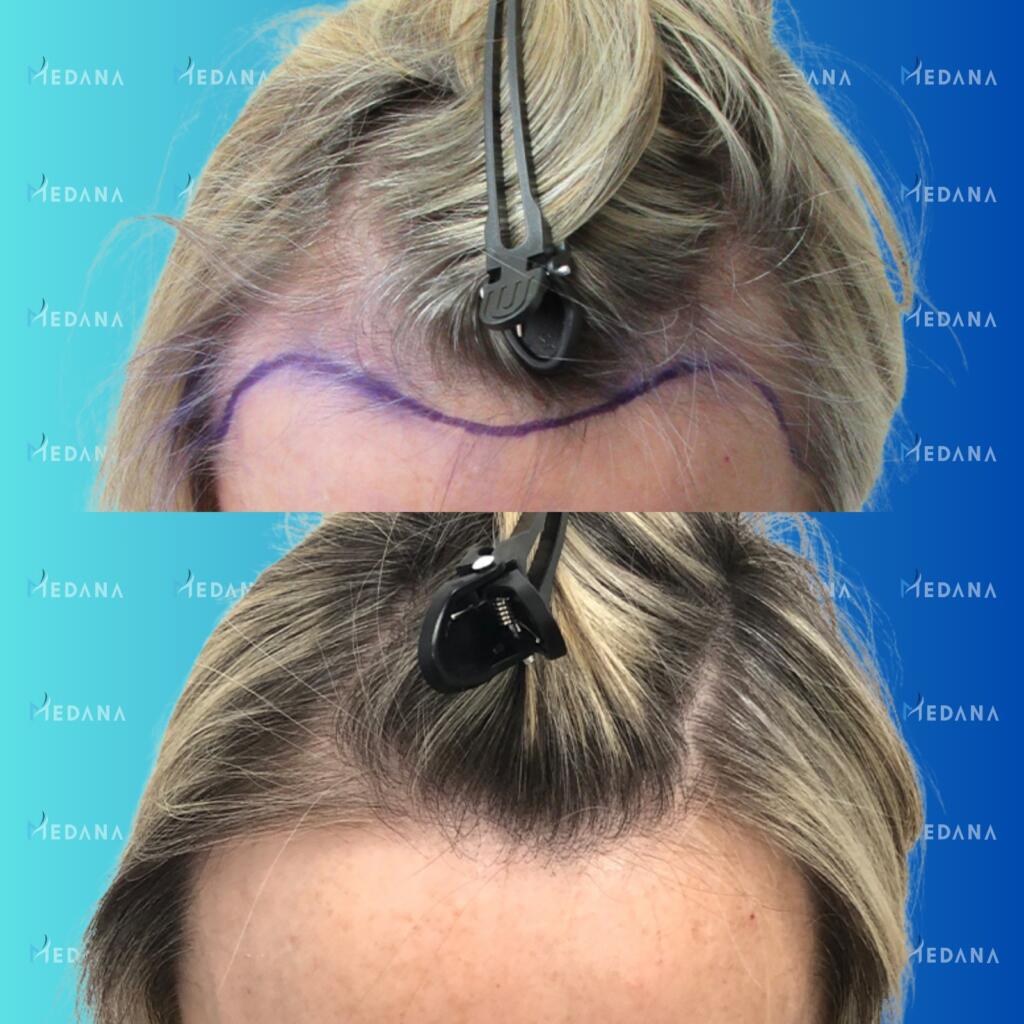
If you’re struggling with thinning hair, a receding hairline, or visible scalp areas, you’re not alone. Many women feel like they have no options, but that is no longer the case. With modern hair transplant solutions tailored to women’s needs, you can reclaim not only your hair but also your confidence. Medana offers you a private and professional path to looking and feeling your best again.
Restore Your Hair, Renew Your Confidence
GRAB YOUR FREE CONSULTATION NOW
No obligation. Just honest answers and a full hair analysis by our experts.
Understanding Female Hair Loss: Causes and Impact
Hair loss in women can happen for a number of reasons including hormonal changes, genetics, stress, nutritional deficiencies, or long-term use of tight hairstyles. Unlike male hair loss, which often starts with receding at the temples or crown, female hair thinning usually presents as a widening part or reduced overall density. This makes diagnosis and treatment more complex and highlights the need for a personalized, female-focused medical approach.
The emotional effects of hair loss can be devastating. Many women feel embarrassed, anxious, or socially withdrawn because of visible thinning. At Medana, we treat hair loss as both a medical and emotional concern. Every treatment starts with a complete analysis of your scalp, lifestyle, and medical background, so we can create a long-term solution that restores volume and improves your quality of life.
Can Women Get Hair Transplants? Yes, and They Are Highly Effective
Thanks to advancements in medical hair restoration, hair transplants are now a safe and successful solution for women facing permanent hair thinning. Techniques like FUE (Follicular Unit Extraction) and DHI (Direct Hair Implantation) are minimally invasive procedures that deliver natural, lifelong results. Unlike older methods, modern female hair transplants do not require shaving the entire head and leave no visible scars.
At Medana, we specialize in hair restoration for women. We treat conditions like female pattern hair loss, alopecia, and traction damage from tight hairstyles or extensions. Our techniques are especially effective in restoring thinning areas around the crown, temples, and frontal hairline. If you’ve tried medications, oils, or vitamins with no success, a hair transplant may be the permanent solution you’ve been looking for.
PCOS Hair Loss and Hair Transplants: What Women Should Know
Hair loss is one of the most emotionally difficult symptoms of Polycystic Ovary Syndrome (PCOS), and one of the least talked about. While PCOS is widely known for irregular periods, weight changes, and fertility challenges, thinning hair often affects a woman’s confidence just as deeply, sometimes more. Understanding why PCOS causes hair loss, and what can realistically be done about it, is the first step toward making an informed decision about treatment.
What Is PCOS, and Why Does It Affect Hair?
Polycystic Ovary Syndrome is a hormonal disorder that affects how the ovaries function. It’s one of the most common hormonal conditions in women of reproductive age, and its effects reach far beyond the reproductive system. PCOS disrupts the normal balance of hormones in the body, and hair follicles are extremely sensitive to that balance. When hormone levels shift, hair growth shifts with them.
The result is a specific and often frustrating pattern of hair thinning that behaves differently from ordinary aging or stress-related shedding.
How PCOS Causes Hair Loss?
1. High Androgens
PCOS is strongly associated with elevated levels of androgens, hormones like testosterone and, more specifically, its byproduct DHT (dihydrotestosterone). These hormones aren’t exclusive to men; women naturally produce them too, but in much smaller amounts. When androgen levels rise, as they often do with PCOS, DHT binds to receptors in the hair follicles and gradually shrinks them. Over time, this shortens the hair’s growth phase, thins each strand, and can eventually stop new growth altogether in affected areas.
2. A Distinctive Thinning Pattern
Unlike male pattern baldness, which usually starts at the temples or crown in a receding pattern, PCOS-related hair loss tends to follow a pattern closer to female pattern hair loss. Thinning is most noticeable at the crown of the scalp and along the center part line, where the hair may appear wider or more see-through than it used to. The frontal hairline is typically preserved, which is one of the clues doctors use to distinguish PCOS hair loss from other causes.
3. Insulin Resistance
Many women with PCOS also experience insulin resistance, where the body’s cells don’t respond efficiently to insulin. This forces the pancreas to produce more insulin, and higher insulin levels are linked to increased androgen production in the ovaries. It becomes something of a cycle: insulin resistance raises androgens, and androgens accelerate hair thinning. This is part of why PCOS hair loss is often tied closely to metabolic health, not just hormone levels in isolation.
Why PCOS Hair Loss Needs a Different Approach?
Because PCOS hair loss is driven by an active hormonal condition rather than a one-time event, it behaves differently from other types of hair loss. It’s often diffuse, meaning it’s spread across the scalp rather than localized to one area. It can also be progressive, continuing to worsen as long as the underlying hormonal imbalance remains untreated.
This is the central issue when considering a hair transplant for PCOS-related hair loss: a transplant addresses the visible symptom, the thinning itself, but it does not treat the hormonal cause. If androgen levels aren’t brought under control, the hair loss can continue in untreated areas of the scalp even after a successful procedure.
Can You Get a Hair Transplant for PCOS Hair Loss?
Yes. Many women with PCOS are good candidates for hair transplant surgery, but it requires a more careful evaluation than a standard case of hair thinning. Three factors matter most:
- Hormone stabilization first: Before any transplant is considered, hormone levels should be tested and, wherever possible, brought into a stable range through medical management. This might involve working with an endocrinologist, gynecologist, or your primary physician, depending on your situation. A transplant performed while androgens are still highly elevated risks disappointing results, since the same process that caused the original thinning can continue to affect the surrounding hair.
- Donor area evaluation: Hair transplants work by moving healthy, DHT-resistant follicles from a donor area (typically the back and sides of the scalp) to thinning areas. But because PCOS often causes diffuse thinning rather than loss confined to one spot, the donor area itself may be thinner than it would be in a typical case. A thorough scalp evaluation is essential to confirm there’s enough healthy donor hair to work with before committing to surgery.
- Realistic expectations about permanence: Hair follicles that are successfully transplanted from a healthy donor area generally keep their original resistance to DHT, even after being moved. This is why transplanted hair is often described as “permanent.” However, this permanence applies specifically to the transplanted follicles. It doesn’t protect the hair that was never moved. That’s why treating the hormonal root cause isn’t just supplementary advice; it’s what protects the rest of your natural hair and the long-term appearance of the results.
What This Means in Practice
For most women with PCOS considering a hair transplant, the ideal path looks like this:
- Medical evaluation to test hormone and insulin levels and identify the extent of androgen involvement.
- Hormonal management, often through medication, lifestyle changes, or a combination of both, to bring androgens into a more stable range.
- Scalp and donor area assessment to determine how much healthy hair is available and which areas would benefit most from transplantation.
- A personalized transplant plan, if surgery is appropriate, designed around your specific pattern of thinning and donor supply.
- Ongoing monitoring, since PCOS is a chronic condition and hormone levels can shift again over time.
This isn’t meant to discourage anyone from pursuing a transplant. For many women, it leads to genuinely excellent, lasting results. It’s simply a more layered process than a standard hair restoration case, and it works best when the hormonal condition and the cosmetic goal are treated as two connected parts of the same picture, rather than separately.
Can Women Get Hair Transplants? Yes, and They Are Highly Effective
Thanks to advancements in medical hair restoration, hair transplants are now a safe and successful solution for women facing permanent hair thinning. Techniques like FUE (Follicular Unit Extraction) and DHI (Direct Hair Implantation) are minimally invasive procedures that deliver natural, lifelong results. Unlike older methods, modern female hair transplants do not require shaving the entire head and leave no visible scars.
At Medana, we specialize in hair restoration for women. We treat conditions like female pattern hair loss, alopecia, and traction damage from tight hairstyles or extensions. Our techniques are especially effective in restoring thinning areas around the crown, temples, and frontal hairline. If you’ve tried medications, oils, or vitamins with no success, a hair transplant may be the permanent solution you’ve been looking for.
Can Women Get Hair Transplants? Yes, and They Are Highly Effective
Thanks to advancements in medical hair restoration, hair transplants are now a safe and successful solution for women facing permanent hair thinning. Techniques like FUE (Follicular Unit Extraction) and DHI (Direct Hair Implantation) are minimally invasive procedures that deliver natural, lifelong results. Unlike older methods, modern female hair transplants do not require shaving the entire head and leave no visible scars.
At Medana, we specialize in hair restoration for women. We treat conditions like female pattern hair loss, alopecia, and traction damage from tight hairstyles or extensions. Our techniques are especially effective in restoring thinning areas around the crown, temples, and frontal hairline. If you’ve tried medications, oils, or vitamins with no success, a hair transplant may be the permanent solution you’ve been looking for.
Restore Your Hair, Renew Your Confidence
GRAB YOUR FREE CONSULTATION NOW
No obligation. Just honest answers and a full hair analysis by our experts.
Why Women Choose Medana
Medana stands out as one of the only American owned hair transplant American clinic which perform in Istanbul that offers dedicated female care. Our clinic was designed with women in mind, providing private consultation spaces, female-only medical teams on request, and specialized methods that protect the natural appearance of your hair during and after the procedure. Your comfort, privacy, and satisfaction are at the center of everything we do.
We also take pride in combining the best of two worlds. Our clinic operates at the level of American medical standards while offering the warmth and personalized care that Turkish hospitality is known for. From your first message to your final follow-up, you will be guided by experienced professionals who truly understand the physical and emotional aspects of female hair restoration.
Female Hair Transplant Packages
STANDARD
Standard Hair Restoration Package
- FUE or DHI
- Doctor Design
- Maximum Grafts
- 1 PRP Session
- 1 Medical Hair Wash
- 1 Month of Products
- 4 Days (3 Nights) Stay
- VIP Transportation
PREMIUM+
Premium Hair Restoration Package
- FUE, DHI or Combination surgery
- Doctor Design
- Maximum grafts
- 1 PRP Session
- 1 Mesotherapy Injection
- 1 Hyperbaric Chamber
- Oxygen Treatment
- 2 Medical Hair Wash
- 6 Months of Products
- 5 days (4 nights) stay
- VIP Transportation
ELITE
Elite Hair Restoration Package
- FUE, DHI or Combination surgery
- Doctor Design
- Maximum grafts
- 2 PRP Session
- 1 Mesotherapy Injection
- 1 StemCell Injection
- 2 Hyperbaric Chamber
- 3 Medical Hair Wash
- 12 Months of Products
- 6 days (5 nights) stay
- VIP Transportation
Our medical team is available 24/7 for post-operative support, and we maintain a transparent pricing policy with no hidden costs
What to Expect After Your Hair Transplant
The effect of our techniques and exclusive Medana Zen Recovery program is that it makes the process of healing quick and smooth. Most women return to normal life within a few days, with only minor redness and crusting that naturally fade within a week. We provide a full aftercare kit and detailed instructions to ensure optimal healing and consistent growth.
You can expect new hair to start growing around the third or fourth month, with full results showing between nine and twelve months. Throughout this period, our team remains available to support you by phone or video consultation. We are not just offering a surgery, we are offering a full year of medical care and guidance to ensure lasting success.
Start Your Journey with a Free Hair Assessment
Every transformation begins with a detailed consultation. Our team offers a free, no-obligation assessment where you can share your goals, medical background, and recent photos. Based on this information, we will send you a full report including graft estimates, hairline recommendations, and our professional opinion.
This is not a sales pitch, but a personalized medical consultation designed to inform and empower you. We believe in full transparency, honest advice, and treating every woman like a VIP from day one. Start your journey toward fuller, natural hair with a single click, and let our experts guide you every step of the way.

Medana offers an all-inclusive packages with local VIP transport and premium hospitality, providing a hassle-free experience at lower cost than most basic packages in North America and Europe.
- ICE Direct Hair Implantation technology
- ICE FUE Sapphire technology
- Accredited private hospitals
- Pre & Post-operational medications
- Guaranteed hair growth for 12 months
- Luxurious accommodations
- Growth booster pack for 3 months
- VIP Transfer Service (round trips)
- Post-operative follow-ups for 12 months
- Customer-centric services
Frequently Asked Questions (FAQs)
1. Can I get a hair transplant without shaving my head?
Yes. Most female patients qualify for a no-shave DHI hair transplant, which keeps your existing hair intact during the procedure.
2. Will the treatment hurt?
Not at all. We use a localized anesthesia technique that is pain-free and allows you to remain fully relaxed throughout the session.
3. Is it safe for women going through menopause?
Absolutely. As long as you have a healthy donor area, our specialists can help design a transplant plan that works effectively during any life stage.
4. How long does it take to see results?
You will start seeing growth after three to four months, with full results becoming visible by the twelfth month.
5. Can this help with traction alopecia or hairline damage from styling?
Yes. These are among the most common conditions we treat. Our precise tools and artistic approach allow us to restore natural-looking hairlines with excellent success rates.